International collaboration
Australia
In Australia, our partners are based at the University of New South Wales (UNSW) in Sydney. This collaboration began in 2020, when postdoc Lauren Kelada visited Frambu’s Sibling Camp outside of Oslo. During her stay, Kelada interviewed several Norwegian siblings for a qualitative study on siblings’ lives and experiences.
The Sibling Project’s PhD student Solveig Kirchhofer undertook an exchange from Oslo to UNSW in autumn 2023. In spring 2026, an Australian team was trained in SIBS-ONLINE with Maddison Smith, a PhD student at UNSW, conducting an evaluation of SIBS-ONLINE in Australia. Statistician Nancy Briggs at UNSW collaborates with us on analyses from the SIBS-RCT.
Denmark
SIBS has been evaluated in Denmark under the direction of the Danish Social Services and Housing Authority. The Norwegian developers of SIBS have participated in the project and have conducted several group leader courses in Denmark, but the actual evaluation was conducted by the independent Danish Centre for Social Science Research (VIVE).
VIVE evaluated SIBS in 13 municipalities, examining experiences with implementation, economic aspects, outcomes for participants, and the potential for expansion to other municipalities. Municipalities adapted SIBS locally, leading to varied implementation methods, each with its own strengths and challenges. Results showed small but positive effects on children’s and parents’ communication and well-being.
Participants reported improvements in quality of family conversations, but opportunities for deeper discussion may have been limited by the short duration of the SIBS program. Challenges with recruitment were also noted, particularly among minority families. VIVE concluded that there was broad agreement about the need for SIBS as a preventive program, and 9 of 13 municipalities had already decided to continue offering it.
The evaluation also indicated potential for further expansion, although local priorities and existing services may influence uptake. Municipalities found that the cost of providing SIBS was relatively low. The Danish Social Services and Housing Authority estimated that it cost 6,300 Danish kroner (approximately €840) per participating family to implement SIBS, which is lower than the cost of many other preventive programs.
Following this evaluation, 14 additional Danish municipalities have sent staff to SIBS training. Two group leaders in Vejle municipality have been trained as group leader instructors and now conduct further SIBS group leader training in Denmark.
Cambodia
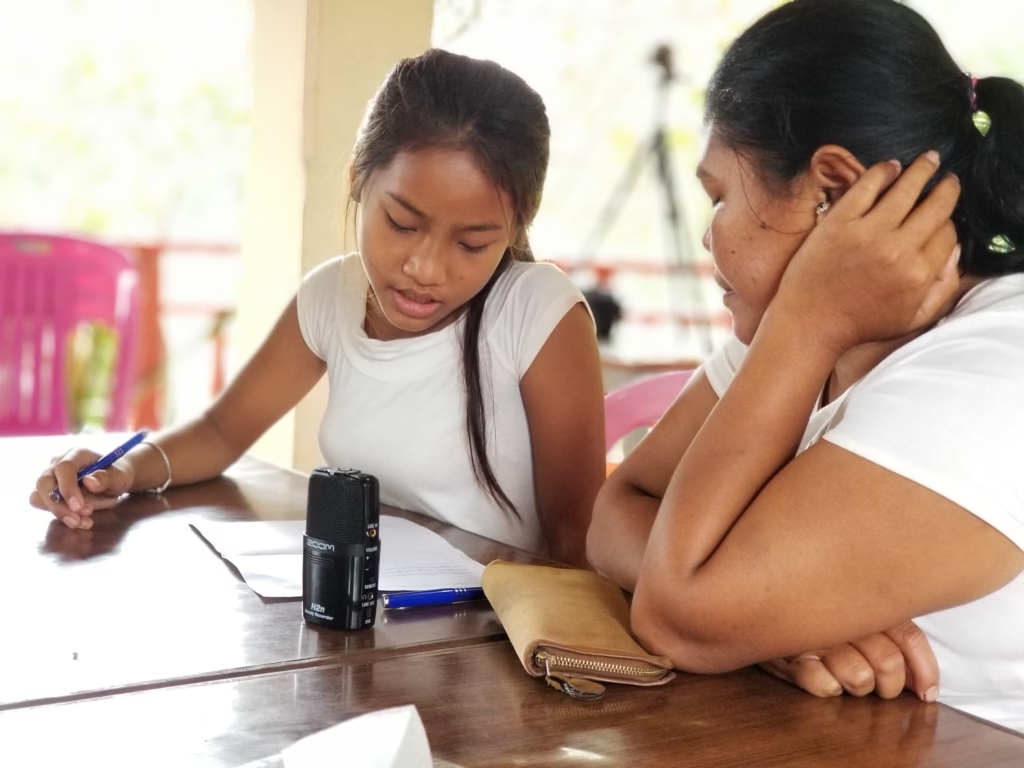
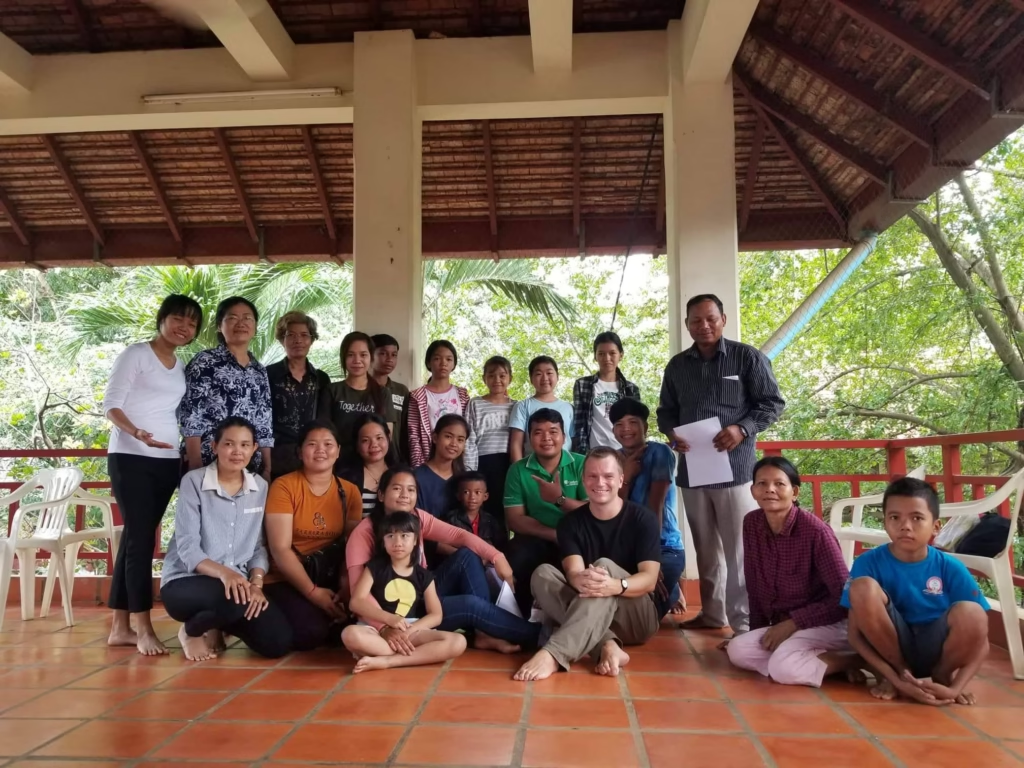
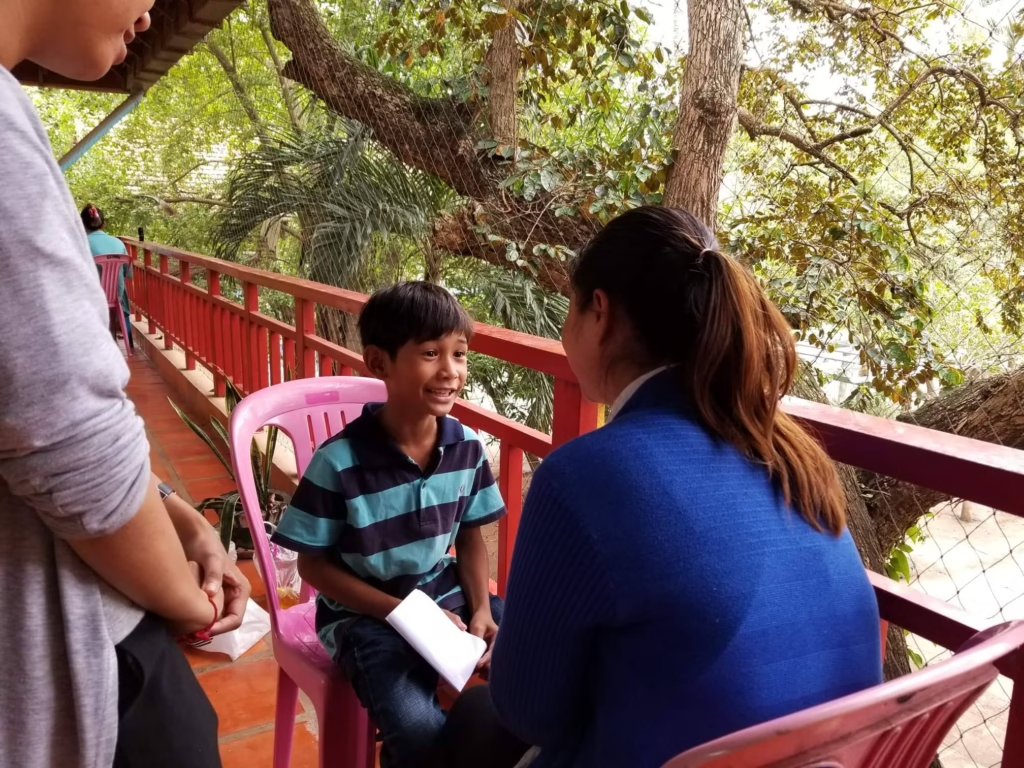
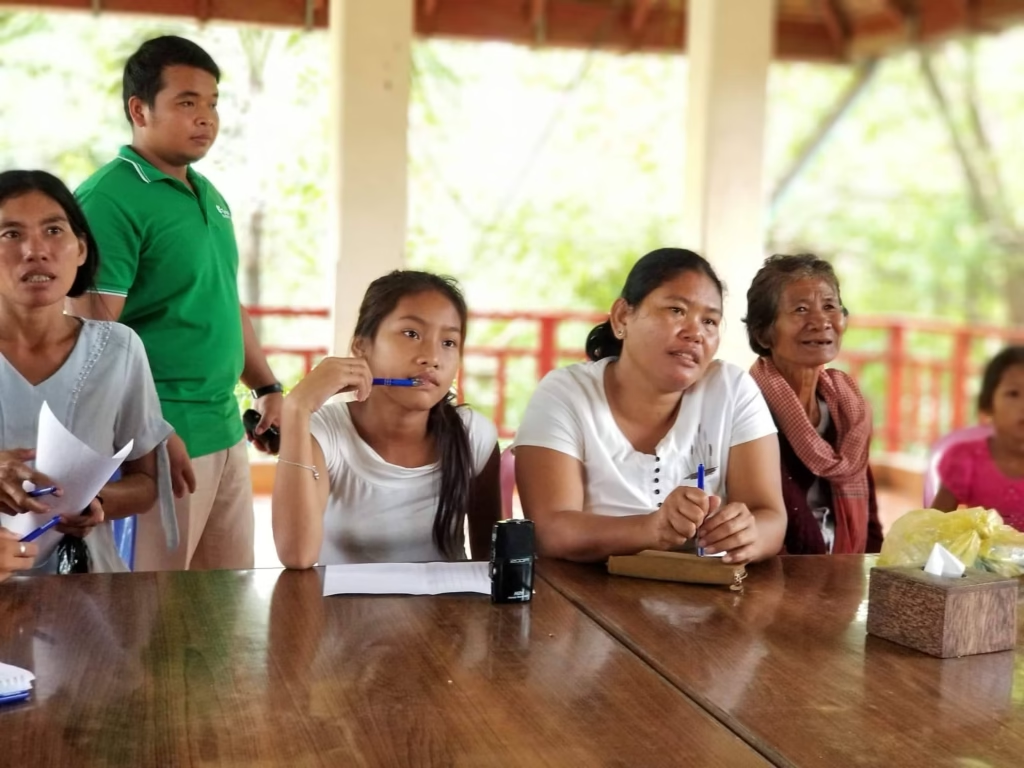
The SIBS Project has collaborated for several years with Caritas Cambodia and their Child and Adolescent Mental Health Clinic at Chey Chumneas Referral Hospital outside Phnom Penh. This is the only child and adolescent psychiatry clinic in Cambodia, and is supported by Caritas. The clinic provides services to children and youth with neurodevelopmental disorders and mental illness and their families. Children in these families are often particularly vulnerable due to poverty and lack of social welfare services. Press here for more information about the clinic.
The clinic has long worked to engage families in treatment, making the sibling project highly relevant. After training of local health personnel and several pilot groups, we conducted a 2019 study in which 54 Cambodian families received the Khmer-language version of SIBS, led by local group leaders.
As in the Norwegian study, siblings reported better mental health after participation and high satisfaction with the groups. However, there was no change in perceived family communication, which may reflect cultural differences that need further exploration. Read the article about SIBS in Cambodia here.
The COVID-19 pandemic temporarily disrupted travel to Cambodia, but with funding from SPARK Social Innovation (University of Oslo), we invited four Cambodian clinicians to Sydney in February 2026 for a renewed SIBS training and discussions on further development of SIBS in Cambodia.
The pictures are shared with the consent of the families.
The Netherlands
We collaborate with Vrije Universiteit (VU) Amsterdam with a group that also works with siblings of children with disabilities. In autumn 2023, VU PhD student Linda Messemaker completed a three-month research stay with us at the University of Oslo. Linda works with an intervention for siblings in the form of a digital game called “Broodles” and is supervised by Professor Paula Sterkenburg and Professor Agnes Willemen. Linda tested Broodles with Norwegian families during her stay in Norway. Results are published here.
Linda is now a postdoctoral researcher at VU Amsterdam, and we are jointly developing a new sibling adaptation questionnaire, in collaboration with teams in North and South America, Asia, and Australia.
United Kingdom
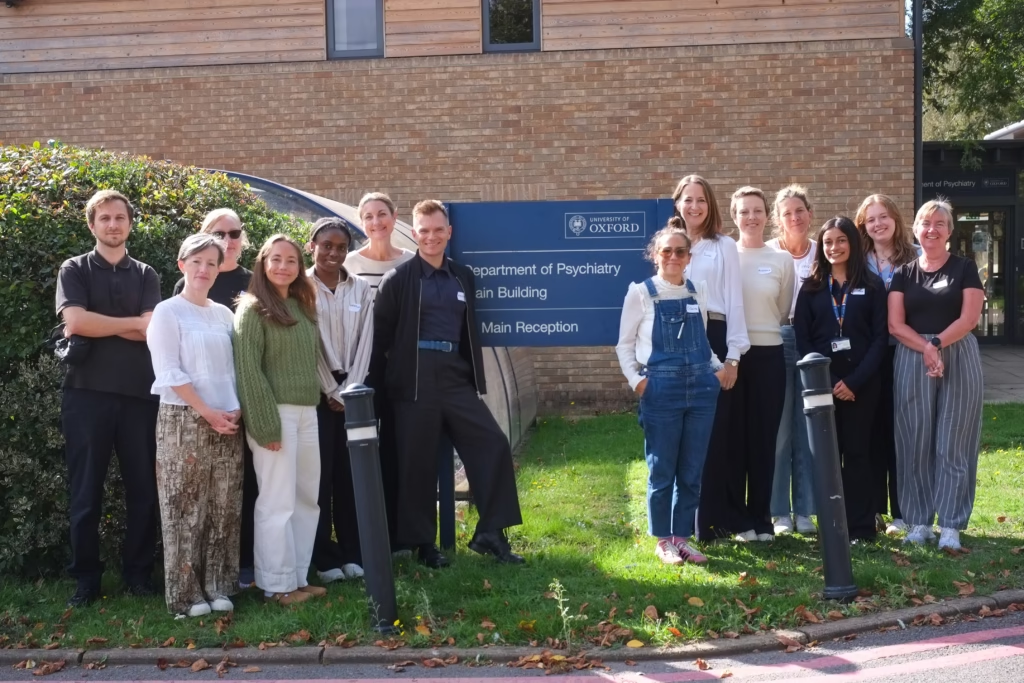
Our most active UK partner is the Department of Psychiatry, University of Oxford, where Norwegian PhD candidate Amalie Schumann is testing SIBS with families of children with eating disorders. Amalie’s project is funded by the Aker Foundation and her supervisors are Associate Professor Louise Dalton and Associate Professor Elizabeth Rapa. In autumn 2025, the SIBS Norway team trained clinicians from three clinics from the Berkshire and Oxfordshire National Health Service (NHS) Trusts. Other partners include Hertfordshire NHS and Northamptonshire NHS Trust, and we are in dialogue with Great Ormond Street Children’s Hospital about future collaborations.
Sweden
As part of the MiniSIBS project for preschool age siblings, we collaborate with Elin Falk and three colleagues at Vrinnevi Hospital in Norrköping. Falk secured funding for the Swedish translation of MiniSIBS, and pilot testing at Vrinnevi Hospital began in autumn 2025. The Swedish MiniSIBS materials are available here.
Germany
Our German partner is the University Medical Centre Hamburg-Eppendorf where a small team was trained in SIBS in 2019. Unfortunately, rollout of the German version was repeatedly delayed due to the COVID-19 pandemic. However, we have published two systematic review articles with this team on methods for measuring parent – child communication quality in international research:
Zapf, H., Boettcher, J., Haukeland, Y., Orm, S., Coslar, S., & Fjermestad, K. (2023). A systematic review of the association between parent-child communication and adolescent mental health. JCPP Advances, e12205. https://doi.org/10.1002/jcv2.12205
Zapf, H., Boettcher, J., Haukeland, Y., Orm, S., Coslar, S., Wiegand-Grefe, S., & Fjermestad, K. (2022). A Systematic Review of Parent-Child Communication Measures: Instruments and Their Psychometric Properties. Clinical Child and Family Psychology Review. https://doi.org/10.1007/s10567-022-00414-3
United States
The SIBS Project has several collaborators in the US. At Baylor University, Texas, we trained Associate Professor Christine Limbers’ team in SIBS-ONLINE. They conducted a pilot study testing SIBS-ONLINE with three families of children with diabetes. Read it here. At Yale University, Connecticut, Professor Wendy Silverman serves as an advisor for our research. We also collaborate closely with researchers at the University of California, Los Angeles (UCLA), particularly focusing on families of children with autism.
Additional international collaborations
We have ongoing discussions about future SIBS collaborations with research teams in Turkey and Italy.